Showing posts with label dead prez. Show all posts

Friday, March 6, 2020

Broken Rhythm: Bruce Lee, Musashi & Music


Broken Rhythm: Bruce Lee, Musashi & Music

By: Adisa the Bishop


                       Legendary scene in Return of the Dragon starring Bruce Lee and Chuck Norris


No one debates the cultural impact of Bruce Lee. This is especially real inside the Hip-Hop subculture. His roles as a martial artist and philosopher ensures  his status as possibly the most legendary martial artist ever. However, one of the most fascinating things about Bruce Lee is really not his fighting. It is his dancing. More than that though, it is valuable to look at how his dancing impacted his approach to fighting. Futhermore, it is powerful to study how this fusion of dancing, fighting and music seem to be eternally connected.


Bruce Lee was a champion Cha Cha dancer. In fact, his first job in America was as a dance teacher. This may appear boring on the surface to some people. However, for those who are authentic lovers of music (especially Hip-Hop) it makes the man even more fascinating. The first movie I saw that had Bruce Lee in it was Return of the Dragon. Even then, it showed  a glimpse of his love of shrouding devastating attacks hidden in rhythm. In the final fight scene, Lee fights Chuck Norris at the Coliseum in Rome. Chuck remains formidable as an opponent as long as Bruce stays within the traditional scope of kung fu and karate. However, once he starts hiding his attacks in a boxers rhythm (a la Muhammad Ali) Chuck cannot follow Bruce’s form and soon loses the battle. Few knew his ability to find and break rhythm was rooted in his Cha Cha background. But this connection goes much deeper than one film or one man.

Fast forward to the 2004 martial arts thriller, Hero. Jet Li plays a character called Nameless. In one scene Nameless has a powerful sword fight at an outdoor chess house in the middle of a rain storm. It is a soul stirring exchange of movement, music and strategy. As they unsheath their weapons an elderly blind man plays a sad but beautiful song. The old man plays in the rain slightly exposed to the elements of nature . Before he dives into battle, Nameless reflects on the idea that “Martial arts and music share the same principles. Both wrestle with complex chords and rare melodies.”


Nameless and Sky clash physically and mentally at  the outdoor chess house in 2004 classic Hero.

A few years ago I was given a book called The Straight Lead, by Teri Tom. The Straight Lead was Bruce Lee’s favorite and arguably his most powerful punch. In the book, Tom makes a compelling case for the connection between music and martial arts. “The way fighters play with time is very similar to the way musicians interpret time. You can play behind the beat, on the beat, or syncopate. Staccato or Legato. You can chose to play or let the rhythm section pass you by. The tempo may vary from adagio (slow) to allegro (quick). To the time, you can then add dynamic variations- pianissimo (soft), mezzo forte (moderately loud) or fortissimo (very loud). Fighting has analogous variables. “ The connections between music and martial arts is hard to see in today’s times. This is mainly because in the modern technology wave of mind numbing Worldstar and Instagram knockout clips, the art in “martial arts” has largely evaporated. Nevertheless, it is not gone altogether.

I cannot say for sure that Mayweather studies dance. But when I look at his footwork against McGregor’s mummy-like movements in the first round (although McGregor does appear to use the straight lead with some effectiveness in the first few rounds), Mayweather does move like a seasoned dancer. Not just that, the patterns with which Mayweather strikes his opponents have rhythmic patterns. This was something on my mind as I watched the flight. The more I watched, I saw how the flow of his footwork was levels above McGregor. They say Mayweather pulled McGregor into “deep water”. Water, like dancers and fighters, has to flow. McGregor was drowned in the flow.  

Legendary undefeated self-taught swordsman Miyamoto Musashi is celebrated by martial artists and entrepreneurs the world over for his book The Book of 5 Rings. He killed his first opponent at the tender age of 13. In The Book of 5 Rings he talks about the importance of understanding the rhythm of battle when dueling with swords. It is broken down into several sections: the Earth Scroll, Water Scroll, Fire Scroll, Wind Scroll and the Void Scroll (also known as the scroll of emptiness). Each is admired for having its own sense of rhythm. But more than rhythm, like Teri Tom, he focuses on timing:

Timing is important in dancing and pipe or string music, for they are in rhythm only if timing is good. Timing and rhythm are also involved in the military arts, shooting bows and guns, and riding horses. In all skills and abilities there is timing.... There is timing in the whole life of the warrior, in his thriving and declining, in his harmony and discord. Similarly, there is timing in the Way of the merchant, in the rise and fall of capital. All things entail rising and falling timing. You must be able to discern this. In strategy there are various timing considerations. From the outset you must know the applicable timing and the inapplicable timing, and from among the large and small things and the fast and slow timings find the relevant timing, first seeing the distance timing and the background timing. This is the main thing in strategy. It is especially important to know the background timing, otherwise your strategy will become uncertain.

While it is simple to just passively look at that idea as just an odd relatable tidbit of information, it is not something easily done. While doing some research on his life, you can find an old scroll about his life called Busho Denraiki. Muashi did not write about himself much. He wrote about swordsmanship. But in the Busho Denraiki you learn that Musashi was not just a swordsman, he was an accomplished painter as well. Further, Musashi was also accomplished in the highly regarded Japanese tradition of Noh dancing. William De Lange’s Origins of a Legend: The Real Musashi notes that Musashi adopted a son named Iori. He notes that, “Irori was taught the Noh dance in plain clothes, it seems Musashi was a keen practitioner of the art.”

Nowhere in De Lange’s work does it attempt to explain how this unequalled swordsman found the time to learn let alone teach Noh dancing. However, the fact that he did know the art of Noh well enough to teach speaks volumes about how the role of rhythm in battle came so natural to him as a fighter.

Currently African American MMA fighter D’Juan Owens spends time in Kampala, Uganda and Dakar, Senegal teaching both b-boying and martial arts to kids. He teaches them the connectivity in both. RZA of Wu Tang Clan teaches a lot about these elements not only in his books, but the entire discography of the Wu Tang Clan is an embodiment of that concept.

Khnum Muata Ibomu aka stic.man of Dead Prez is a respected rapper, archer, vegan health advocate, activist and dedicated martial artist. Songs like Way of Life and Back on my Regimen are excellent examples of how music and martial arts connect in contemporary Hip-Hop. His knowledge of martial arts, music and strategy are so deep I had to ask him his thoughts.

“Practice is the way we get better in the application of rhythm” he told me. Stic said he feels that there is “Some science but it is also art. Self expression is required. My studio is a sacred space just like a dojo for experimentation and practice. Lyrics are precisely chosen and placed just like strikes and footwork.” Finally he notes that both music and martial arts are used “to serve a greater good.”

Jeet kune do, bboy/bgirl dancing, boxing, ballet, brazilian jiu-jitsu, capoeira, noh dancing, swordsmanship - all styles, all contain rhythms. Outside of the practicality of each art, each style speaks to us on an artistic and internal levels. Does every martial artist need to study dance in order to be a better practitioner? Maybe not. However, to totally ignore the importance of dance within the fighting arts is to cut oneself off from new insights and opportunities for victory.

LISTEN to this this episode of Bishop Chronicles Podcast on Bruce Lee and his love for dance and how it informed his fighting. 

Adisa, The Bishop is the Founder of the Hip-Hop Chess Federation and host of Bishop Chronicles Podcast. He is a brown belt in Brazilian Jiu-Jitsu at Heroes Martial Arts and author of The Iron Hook Scroll and Bobby, Bruce & the Bronx: The Secrets of Hip-Hop Chess available on Amazon.

Monday, March 2, 2020

Stic.man Releases Fit Hop album The Workout 2, out now!!


                                     The Workout 2 by Stic.man  is available now on iTunes and Amazon

"A warrior lives with integrity and honor/ Keeps his loved ones protected like armor/ Without even a word, you can feel the aura/ Respect is evident through his values and morals..."
                                                                                            - Stic.man , White Belt

The new album release The Workout 2 from Stic.man just dropped. It features amazing motivational music for those focused on health and fitness. He calls his lane of rap "Fit-Hop" as it stays focused on themes connected to vegan living, yoga, mental clarity and focus. His last album The Workout was a hit around the  world in the urban fitness community. He is also the author of several books that deal with the art of rap as well as how to eat a vegan diet and still gain muscle. Stic.man is truly a groundbreaking artist and athlete in this respect. He is also one of the biggest and most consistent proponents of martial arts as a tool for personal cultivation and civilization.

The Workout 2 features not just raps, but up beat tracks with various slogans to keep you from quitting on yourself during your jog, or lifting session. On the song White Belt at 1:50 and 3:00 you will hear advice from HHCF Founder Adisa the Bishop on mindset a white belt should approach their training with. Listen here  White Belt and share it with other lovers of positive mindsets and good living.Other great songs include Stay Ready, Run, and Put in the Work. This is a great album for parents to get their teens or kids who play sports or aspire to.

Albums like this prove why Hip-Hop has promoted the healthiest lifestyles on earth above any other music form in history. If you think I'm wrong, go look up any lyrics from heavy metal, rock, jazz, soul, R & B, you choose it and lets compare lyric for lyric. Congrats to Stic.man on dropping such a great motivational piece of work. It is currently the #1 album on Amazon for health and fitness!!


Tuesday, June 2, 2015

The Chinese Connection: Hip-Hop and Martial Arts Pt. 1


The Chinese Connection: Hip-Hop and Martial Arts Pt. 1
By: Adisa Banjoko


The HHCF’s fusion of Hip-Hop, chess and martial arts has always been about the blending of art, science and subcultures. A lot of people laughed at us in the beginning. But after hosting the biggest opening exhibit at the World Chess Hall of Fame this October with RZA, our impact was undeniable. In the streets, juvenile halls and colleges, our method is working and the demand is growing across the planet.


As our organization got on the radar of various news and education outlets, our calls to promote STEAM over STEM began to gain a following. My obsession with these three arts and sports were built on a previous foundation.


The two most influential people on my approach to writing are Dr. John Henrik Clarke and Joseph Campbell. Dr. Clarke was great at being able to say in a sentence, what many folks need paragraphs to write. Joseph Campbell taught “perennial philosophies.” It is defined as “a perspective in the philosophy of religion which views each of the world’s religious traditions as sharing a single, universal truth on which foundation all religious knowledge and doctrine has grown.” While my work to date has not been as concise as Clarke or expansive as Campbell, this is my ultimate intent. The goal of this piece is meant to show how the Asian Kung-fu Cinema impacted African-American culture deeper than other minority groups.


taoofjeetkunedo.jpg
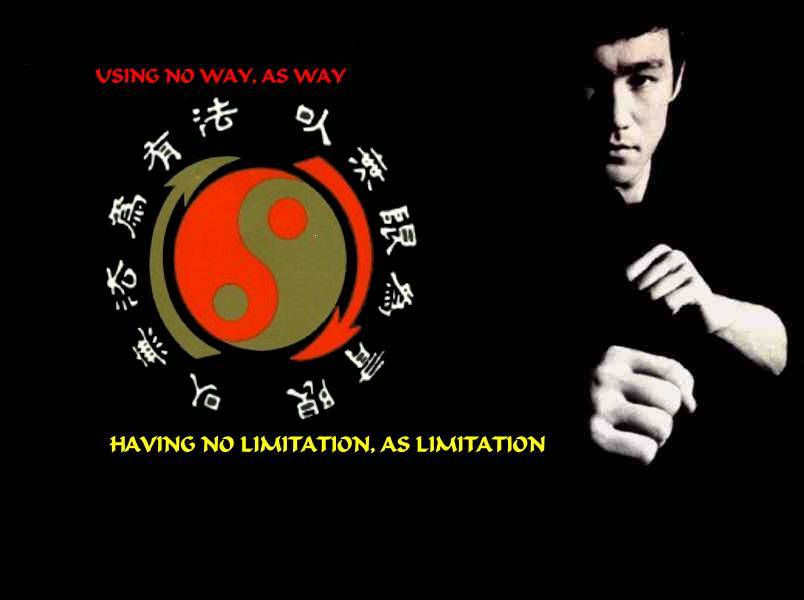
Bruce Lee’s logo for his innovative art, Jeet Kune Do


August 17th 1973, Bruce Lee’s Enter the Dragon opened in NYC. On November 12th 1973 a gang leader from The Bronx unified the street arts of rap, DJ’ing, graffiti and various forms of dance as Hip-Hop. He founded the Universal Zulu Nation that year to preserve and maintain the subculture on a global scale. A year before, Brooklyn’s Bobby Fischer beat Russia's Boris Spassky in a game of global importance. In September, a new film called Pawn Sacrifice will drop about that chess match and everything that was at stake culturally and politically. These three moments of the early 1970’s impacted American chess, martial arts and Hip-Hop in ways none of us understood at the time. Today we are still discovering its impact. Unveiling these connections are still a beautiful work in progress.


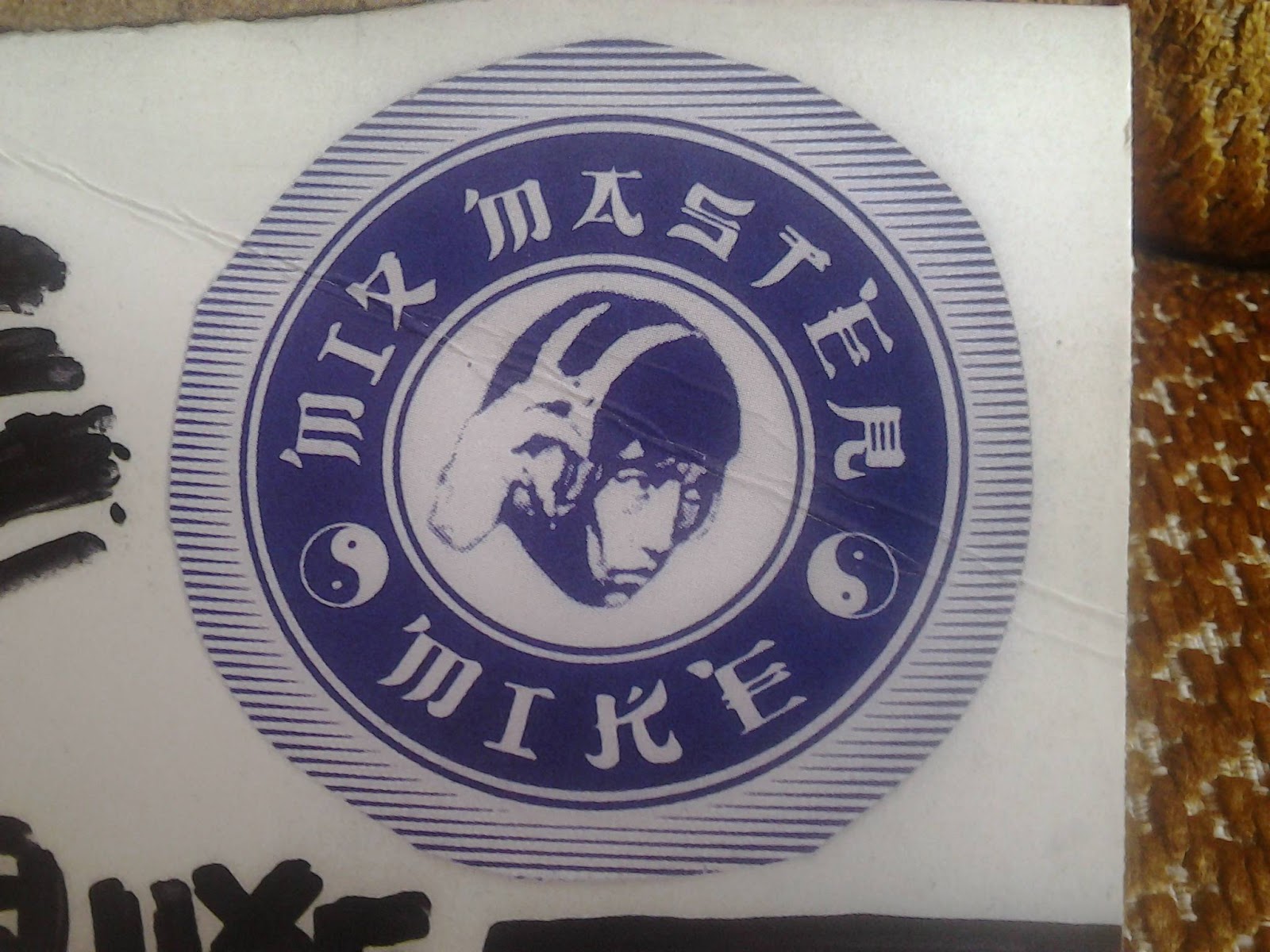
taoofMMM.jpg
The original logo of Mixmaster Mike (of the Beastie Boys) was based on Bruce Lee’s logo for Jeet Kune Do


While exciting entertainment to many, for African American males, Asian Kung-Fu Cinema opened a new door to the Black mind and spirit. Having had our warrior culture removed from us during the transatlantic slave trade though our experience in America, these films gave Black people new ideas and a new ways to reclaim what had been lost 400 years before. Outside of Bruce Lee’s movies films like Shogun Assassin, 36 Chambers of Shaolin, Master of the Flying Guillotine, Shaolin Vs. Wu-Tang, and Drunken Master had immense impact. The David Carradine show Kung-Fu (while riddled with many racist elements) also gave weekly wisdom in prime time to those who were smart enough to pay attention.


It is hard to say how many of the African-American’s embracing these films really understood the cultural differences between Chinese and Japanese culture. Obviously on some level this surface understanding could lead to huge generalizations. On the other, this lack of cultural clarity created a space where all of it was taken in, accepted and appreciated. Those that were sincere, took the time to learn the truth. Over time those numbers grew.  


Though many of the movies by Bruce Lee and the Shaw Brothers were not of the highest production quality, the wisdom shared was on point. Despite whatever flaws may have been in the overdubbed voices or the corny outfits at times, these films became an obsession in Black America. It appears the ancient wisdom, the discipline and the quest for universal truth all filled a hollow space in many African American hearts, minds and bodies. It is hard to imagine the rise in Blacks practicing Buddhism, the number of Blacks doing yoga and all of the Taoist references in Hip-Hop without Kung-Fu films. It is also hard to envision the rise of the vegan movement in Black America without the rise of Kung-Fu films. These movies changed minds, bodies and spirits. Rappers, DJ’s, Bboys and graffiti writers were all affected and reflected the wisdom in their artistic expression.


I don’t think anyone at the time, knew what a benefit these movies would be to Black America. It’s hard to say if Black America itself knew what was taking place and why they were drawn to the films so deeply.


RZA, actor and rapper of the iconic Wu-Tang Clan explained the NY scene in the early 1970’s “In Manhattan on 42nd street they had movies. They had a whole slew of shows. We would watch them every weekend. That was around the age of nine. By the time I was twelve or thirteen I started getting fascinated. I would go into Chinatown buying everything. Kung-fu books, slippers [the flat black shoes made famous by Bruce Lee). You name it, I was on a mission.”


RZA-IF201233D.jpg
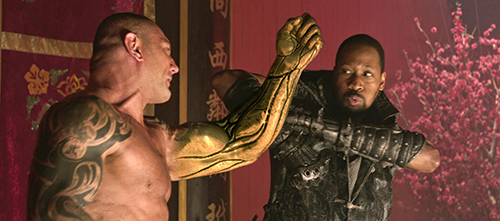
RZA of Wu-Tang Clan showing Kung-Fu skills in Man With The Iron Fist


Reflecting on the impact of the films he says “The good thing for me was growing up in America, there wasn’t much history, outside of the 400 years that I was taught. The only thing they told us back to was Greek mythology, the colonial days, or cowboys and Indians. But I had a chance to watch the martial arts films.  You get to see stuff from the Tang Dynasty, Sung Dynasty, you are seeing 1500 years of history. It kinda opened my mind to a whole new world.... It kinda changed my whole philosophy on life. I started buying books on Buddhism and Taoism. Plus I was studying Christianity, and Islam at the same time. It all translated into my music.”


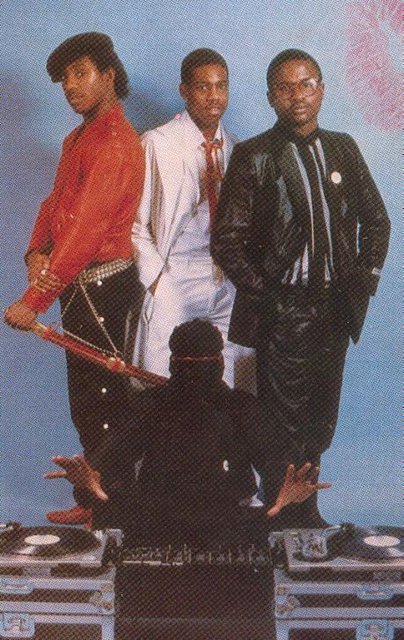
In the early era of Hip-Hop the teens and young adults gave themselves titles like Grandmaster Flash, Grandmaster D and so on. It is still unclear if these were names that were inspired more by Kung-Fu films, or chess, but something new was happening. Rap crews named themselves the Wu-Tang Clan and DJ’s like Mixmaster Ice (of U.T.F.O. towering on stage above the rappers in a ninja outfit. It was all very hard to ignore, and hypnotic to almost anyone who saw it. Other Hip-Hop artists out there notable for showing an influence of martial arts philosophy and culture include Andre Nickatina, Jeru The Damaja, Afu-Ra, DJ Q-Bert and Beastie Boys DJ Mixmaster Mike.


utfogroup.jpg
Rap crew U.T.F.O. with Mixmaster Ice in front rocking a ninja suit, 1985.


Chess, first and foremost in many people's minds is about strategy. The word strategy comes from the Latin root word strategos meaning “leader of the army”.


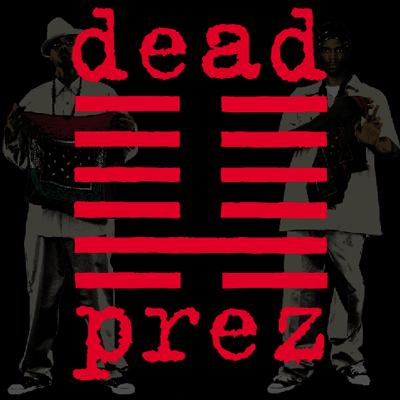
dead prezRED.gif


The logo for revolutionary rap group dead prez is the I-Ching. The I-Ching (The Book of Changes)  is an ancient divination text going back to 1000 BC. It is  a book of various symbols that have rich meaning and various interpretations. The Dead Prez logo is of  hexagram, shi, meaning “Leader” or “the army”. Each hexagram is composed of “inner” and “outer” trigrams. The inner trigram represents water and the outer represents earth.


This idea of being grounded like earth, but flow like water was made popular in America by Bruce Lee. Within the world of jiu-jitsu, they have positions known as closed guards and open guards. In chess, there are positional developments known as open and closed games. In both arts, one must be clear about the differences and understand the importance of how and where to be strong and how and where to flow. These are continuous themes within martial arts and chess.


In part two, we will look more into this relationship between Hip-Hop and martial arts.  We have much more to explore.

Adisa Banjoko is Founder of the Hip-Hop Chess Federation (HHCF). The HHCF is the world's first non-profit 501(c)3 to promote music, chess and martial arts to teach nonviolence at-risk youth. RZA is the organization's HHCF Chess Champion and Director of Outreach. For more information visit www.hiphopchess.com .

Uproxx Covers HHCF Founder plus, FREE PDF download of Bobby Bruce and the Bronx Available

The book Bobby Bruce & the Bronx by Adisa the Bishop is now available from this day forward FREE in PDF form. Please enjoy it and share ...