Showing posts with label technology. Show all posts

Wednesday, June 28, 2017

HHCF Juvenile Hall Diary Day 2 and 3!!!

HHCF Juvenile Hall Diary Day 2 & 3


OK, so my second day I go in and things get real intense, real fast. The kid with the tats who I played and tried to connect with came in tripping. One of the things about the hall is that things happen there that you don’t know about and cannot control. So even if you come in super positive the internal power struggles between the kids, staff and the kids within themselves can make things volotile.

He came in with another kid and though they were in my room there doing what I call “The ostrich thing.” That is when they pull their sweater over their head and put their head on their desk. I don’t tolerate that kinda activity.

I asked them to chill and show respect to the lesson and the time I’m sharing with them. Both sat back up. Later, he starts talking to his boy about street drama and his case. I remind him he needs to quiet up. He starts poppin’ off dropping n-bombs and stuff. I just calmly walked over to the door and had the JIO ‘s (like a CO for juve) come take him out. He was pretty negative on the way out, but the rest of the class was chill.

The rest of the DAY was chill to be honest. I must say though that the peanut butter colored walls and fluorescent lighting really messes with your sense of internal peace. We worked on how to use your rooks together and I showed them the famous Opera House Massacre game by Morphy and talked about the importance of consistence. “What is the queen sacrifice of your life? How seriously are you taking yourself, and your actions irrespective of who you think is ‘hating’ on you?”

They got it. The gaming that day was super positive and fun.

I had some great games with the kids who I played soft the day before. It was a nail biter from front to back.

Day 3


When came in the hall I had my first thoughts ready to go. The kids came in super positive. I told the JIO’s that I would not be taking the kid who was disrespectful from the day before. I opened by giving them some hard, straight talk to realign their collective purpose.

I wrote in huge letters on the whiteboard: INTELLIGENCE WITHOUT DISCIPLINE IS A CURSE!!!

I reminded them that I chose to be there. “ I struggled with drinking and I did a lot of stupid things in high school, but I never got caught” I told them. “ I dropped out, I had to teach myself the bulk of everything I’m doing today. But I need you to respect my time. If you are not interested in living better than you are, go back to your room.” I let the last sentence hang in the air to emphasize my seriousness.

“You know, between the games I hear you all talking about how the streets love you. How the block has your back. But when I come in the morning, I don’t see any of them in line to see you. Nobody is checking to kick it with you. Where all that hood love at?! I don’t see it” I spat defiantly. You should have seen their eyes. They were staring me down with a lot of raw emotion.

“We can’t have friends here. Only family!” one of the boys snapped back.

Before I could respond a JIO in the room with a voice like Barry White yelled out “So what?! Where y’all letters at? Ain’t nobody writing y’all. Keep it real! Nobody checkin’ for you.” Then he looked at me and nodded.

“The hood ain’t missing you. The block don’t miss you. The block don’t miss me. None of us are special and when we are gone, it keeps going on. My point of saying this is not to hurt your feelings. My point is to ask if that is a fact, why do some of you come into my class and waste my time and my knowledge and wisdom that I am trying to bring to you.?!” I was not yelling, but there was what Bruce Lee would call “emotional content”.

“For the rest of your life, it is unlikely that you gonna meet someone that knew Pac, knew The Jacka, knew Eazy and saw some of the greatest to ever do it- do their thing.” I was wearing a college sweatshirt. I pulled on the shirt at the shoulders and said “These colleges I speak at, I taught myself everything I speak on. I guest lecture there because of all the reading I did. All the hours I put in to get that knowledge. I bring it to you from a place of love because I know you don’t understand everything waiting for you outside.”

I paused to let that sink in.

“Most of you don’t even understand how you got here. I can tell you a little bit of how it happened. In 1967 the FBI rolled out to programs. One was called BLACKPRO and the other was called COINTELPRO. Both were aimed at undermiing Black leadership coast to coast. They had an army of 3,000 informants.”

Now before this keep in mind that J. Edgar Hoover, one of the early heads of the FBI was trying to get Black people to take heroin. But Blacks at the time did not like needles. This was back when most of your grandparents were young. In the 80’s White middle class and rich kids did cocaine powder- but Blacks did crack. Whites got short sentences for powder. Many Blacks and Latinos did life for crack.”

“Today, you kids are all taking syrup. Codeine, promethazine, percocet, etc. All of them are opiates- liquid heroin. You are living the dream that Hoover wanted for your grandparents.”

One of the kids interrupted me. “Stop talking about syrup so much. I want some right now.” a boy confessed without reservation. Despite being under 16 his favorite drink is percocets dissolved in Patron. So scary.

“Look” I continued “The closer you are to those drugs, the closer you are to making a mistake that will get you locked up. It is not an accident. Y’all are kids. Alcohol is illegal right? So how is it that billion dollar pharmaceutical companies are able to lose all this top grade syrup and it just happens to be available for cheap in your hood? How is it for sale by your homies at school. Because it is not an accident.”

I pointed to the a digital display of a chessboard. Right now, in the game of life, you are all in check. It is almost over for you. I hope you realize the seriousness of the times you are living in.” By now the room was pretty silent.

“What is the good thing about being in check though?” I asked the strongest Latino chess player.

“He nodded as he spoke to the class “There is still a way out.”

“EXACTLY!.I cried out. “ Exactly. There is still a way out. That is the blessing. I’m telling you now. Stay sober, study, play this game and find your way out. Let me do that for you. The game ain’t over. You can win this, but let me help you.”

From there we went into studying knights. The games were amazing. The one who admitted his addiction played the hardest and came a long way. Monday he did not know the how the pieces moved. Today he was losing, but he was checking people and growing with the game.

I lost a game to a kid after a foolish exchange. Tomorrow, I'm gonna go super hard. These kids are brilliant.

I took some photos of some of the games that got played. I cannot take pics of their faces. But you see the high cognitive function of the kids. A lot of these teens are considered ADD or ADHD. But look at the high level cognitive function happening. Kids this smart should be recruited by Google, Microsoft, Facebook, Twitter and Oracle. They don’t need to hire folks from Asia, India, Africa and China. They can go to NY, LA, Chicago and St. Louis and raise American minds to do this work. Fantastic American genius is being abandoned everyday simply because they were born Black, Brown or poor. Our technology companies need to take big steps to fix this.

I love these moments. I love these opportunities and I thank you for taking the time to read this blog.


PARENTS: Below is a huge song called “Mask Off” by Future that openly promotes the use of “molly” percocets and other opiates to our kids. This style is called Trap Music. The trap is, that if the kids soak in songs like these it leads them to the trap of addiction. I love Hip-Hop. But old school music always had a balanced dialogue. All the popular music on the radio and TV these days is sadly in this vein. Peep the beauty of the melody. IT is an amazingly well produced track. If I didn’t know better, I’d think Future was hired by Hoover.

Thursday, March 9, 2017

Listen to Adisa Banjoko on The Dope Science Show!! #Chess #Steam #Stem + more!!


If you have never heard The Dope Science Show, you are missing something extremely cool. A week or so back they were kind enough to interview HHCF's own Adisa Banjoko about all things related to Hip-Hop, chess, science, steam, stem and all things in between. We encourage you to check it out, follow them and enjoy a fun conversation. Shout out to Science Stuff with Steph for being a great host. Be sure to follow @thedopescience show on Twitter. Here is the link to THE DOPE SCIENCE SHOW!

Saturday, March 4, 2017

Unity in Diversity Was Amazing!!! Amazing

Moderator Miki Noda, DJ AkkikoLUV, Zumbi of Zion I and Sumi Dumela on the technology and culture panel.


Gratitude. That is all I can define my heart's state as. This Sat, the HHCF hosted it's inaugural Unity in Diversity event. It was an attempt to bring a select number of technology people, artists and educators together and talk about the things we love. In the history of my life I have thrown many, many events. All with varied rates of success and failure. Never has any one event I've thrown seemed so well quarterbacked and prepared only to quickly disintegrate at a rapid rate before my eyes. It went from a two day event to a one day event.
The short version of what happened is that I was overextended as a person. As a father, as a husband, promoter, a teacher, a jiu-jitsu student and a friend. But we all have our own issues. It's not all sunshine and rainbows out here. I know that. After a point though, the disintegration was so consistent my heart was becoming hard.
I almost canceled it all a day or two before. Were it not for the actions GOD, of my wife and kids, and friends like Itoco Garcia Paul Moran Chuck Creekmur, AkikoLUV Tomie KingKash Lenear Kevin Clark, Amir Abdul-Shakur and his family, Jay Williams D'Juan "Dirty South" Owens Vince Bayyan Andre Swank, Alan Marques, Iriscience there is no doubt it SURELY would have been canceled.

As I sat up till 4:30 AM the night before I was being terrorized by many levels of failure the event could reach. I was trying to preemptively apologize all the mistakes. Then I realized no matter how bad, or good your world is going. All you can do is get up, take a shower and walk out the door and see what the next day brings. I want to apologize to all the people who were scheduled to speak that were unable to participate due to circumstances beyond our control. I'm resolved to ensuring you all participate in Unity in Diversity II which will be announced in the coming months.
Despite my fears about low turn out and other concerns, Unity in Diversity was amazing. The panels were off the chain. The moderators were on fire. The crowd was dope. The beats banged. Styles were dropped. Lessons were taught. The opening Hip-Hop and Education panel moderated by Daniel Zarazua with Jose Guerra, Mazi Mutafa, Leroy Moore, Dr. Elliot Gann and Dr. Itoco Garcia was really powerful. It highlighted the innovative things many people are doing to inform and inspire kids inside and beyond the classroom.

Artist Amina Lei (center in all black) with UID attendees
The martial arts panel was mind blowing. The technology and culture panel was deeply insightful. Milan Drake was like Rakim talking about technology. Until you have watched Zion I Crew talk with UX Designers about bias in the algorithm you have not lived. Until you see gems from Casey Wong and Tom Callos open hearts and minds simultaneously you have missed something amazing. Mike Relm and his wife drove all the way up to the bay to moderate. That is love. I love Mike Relm though. Blood family level.
Leroy Moore came and brought amazing gems. So did Mya Canty, Miki Noda and Sumi Dumela.
Laughter and understanding were shared. I'm so thankful.
The next day, Paul Moran came and taught my jiu-jitsu kids class. He opened and closed the class with meditation. We hung most of the day. The things he showed me about jiu-jitsu I did not know. He will always be my brother.   

                                         Paul Moran of Open Mat Radio observing HHCF kids chess match! 

Super special shout out to the hardest working woman in Hip-Hop, Christie Z at Tools of War Jams for her consistent promotion of Unity in Diversity. I also want to thank Chuck Creekmur at Allhiphop.com and Kevin Clark of Okayplayer.com for letting folks know about Unity in Diversity and I want to thank all the people who participated as well as all the people who tried to. Forgive me for all the mistakes in the planning and execution. Jose Guerra built a custom made podium for David D. Timony to give the first Unity in Diversity keynote on artificiall intelligence. That is so amazing. Amina Lei brought amazing art. So much to tell. Much love to DJ Just Jay (follow him @Urbanumpires on IG) . He kept it rocking from front to back.


Thursday, February 16, 2017

Technology and Hip-Hop: Innovating Beyond The Code!! Come out as a family.


Come to our upcoming Unity in Diversity event Feb 26th and see an amazing panel of tech experts talk about Technology, and Hip-Hop beyond the code. Get tix here! This is an all ages event and we expect a lot of great people coming out. If you are  a teacher, a student or a parent looking for new insights, this is the event to be at. Do not miss this.

Sunday, December 4, 2016

KPIX News Channel 5 Covers Hip-Hop Chess Federation

    Kenny Choi did a fantastic look at HHCF for Channel 5!! Check out the link here on:  KPIX NEWS . It does a great job of showing that the kids at John O'Connell's Chess and Life Strategies class is thriving. Looking forward to next semester. If you would like our class at your school visit www.hiphopchess.com .

Thursday, May 5, 2016

Hip-Hop Chess Federation Summer Camps Start June 9, 2016!!!


HHCF is happy to announce we will be hosting our always packed summer camps!!!! Our summer camps allow your child to grow learning things like Hip-Hop dance, chess and life strategies, jiu-jitsu, and TV and Film production. Our goal is to refine their character and their fitness levels. HHCF camps will have special guests from the film, technology, jiu-jitsu and chess world visiting our kids. We will also be taking field trips to some of the coolest companies in the technology world. HHCF camp teachers are ALWAYS life scan cleared to ensure your children are consistently in a safe and fun environment. They get packed QUICK so go to www.hiphopchess.com and sign your kids up today! See you in June!! If you would like to DONATE to the HHCF CAMPS or host a visit to your technology company visit our website or donate on our homepage. 


Monday, May 2, 2016

13 Year Old Blind Chess Player Wins Technology Award for Phone App Idea!


13 Year Old Blind Chess Player  Wins Technology Award for Phone App Idea
Chess and Entrepreneurship Student Wins Inspiring Youth Entrepreneur Award
for EyeMenu Phone App!  

San Jose, CA 5/2/16-  Hip-Hop Chess Federation (HHCF) is proud to announce that their thirteen year old student Emmanuel Bard of San Jose, CA won the Inspiring Youth Entrepreneur Award for his phone app concept for EyeMenu. Emmanuel suffers from optic atrophy; the optic nerve in his brain is damaged and makes him legally blind. This prevents him from clearly reading menus at restaurants when he goes out to eat with his mother Emilie Bard. The HHCF is a 510c3  the first nonprofit to fuse chess, martial arts and music to promote unity, strategy and non-violence. Their unique fusion of art and has been featured in Forbes, Good Morning America, Black Enterprise and KPIX News.


EyeMenu was Emmanuel’s  solution to the problem he faces in restaurants. Emmanuel’s EyeMenu App is a phone application that will allow him to see enlarged text of menu items and prices or read menu section and prices using the screen reading software that all phones provide. His idea has been covered in DeBug Magazine as well as  the San Jose Tech Museum. Young Bard has been a participant in the HHCF Chess & Entrepreneurship classes for two months, but has been with the organization for four years. In their weekly classes his mentor, HHCF Founder and author Adisa Banjoko has been assisting Emmanuel on mapping out his app concept, functionality and marketing . “We recognized immediately that the EyeMenu idea was something the world needed.  It is not meant to be an app with a ton of cool graphics. It is a utilitarian to help people navigate through their day with more ease. We know EyeMenu will change the world. ”

He presented his concept on stage with his mother  at the Silicon Valley Entrepreneurs Festival where several  young entrepreneurs shared their ideas with the panel of judges. Emmanuel’s story moved the judges and the audience deeply.  His mother, Emilie Bard stated “I’m very proud of Emmanuel for pushing forward with his concept. His mentor from HHCF was instrumental in helping him cultivate his idea and raise his confidence working on his pitch and telling his story. We look forward to the next stages of actualizing the app.”

If you would like to help Emmanuel complete his EyeMenu project you can donate today to his GoFundMe account. He is also building a team to help him manage the project at Ideator.com.

Emmanuel also participate with his brother in the Hip-Hop Chess Federations’ Chess & Jiu-Jitsu Program. In that class students learn chess and Brazilian Jiu-Jitsu concepts in the same class. This fusion gives students a unique balance of physical and emotional control. When asked about how chess and business work together Emmanuel stated “When you have the mind of the entrepreneur you have the mind of playing chess. You have to use different strategies to win” he said with a smile.

The HHCF recently announced a new summer camp where kids can study chess and entrepreneurship, jiu-jitsu, dance and TV and Film.  To learn more about the HHCF summer camp or donate to the Hip-Hop Chess Federation visit www.hiphopchess.com today!

Monday, February 15, 2016

Why Don’t The Black Kids Like Math and Science?: Easy Answers

Why Don’t The Black Kids Like Math and Science?: Easy Answers
By: Adisa Banjoko and Arash Daneshzadeh

Some ask why we act the way we act, without lookin’ how long they kept us back- Public Enemy, Rightstarter


I took a job working as a security guard for about five years while doing guerrilla research for my non-profit (Hip-Hop Hop Chess Federation) to help at-risk kids at John O’Connell High School in San Francisco. At the time, “OC” had a solid reputation as a tough school. In my five years there I learned a lot about youth violence, teen eating disorders, teen pregnancy and alcohol and drug abuse. What I saw and learned changed me as a parent and a teacher forever. One of the main things I learned was about why kids don’t learn.


For the record, that school has many loving and competent teachers in the space of math and science. However, “Why don’t the Black kids like math and science?” was a common question. The answer for me, as a Black male who was transformed by books like Golden Age of the Moor by Dr. Ivan VanSertima, African Presence in Early Asia by Dr. Runoko Rashidi and The Black Man of The Nile and His Family by  Dr. Yosef Ben Jochannan was very easy.


plymouthrock.jpg (1).jpg
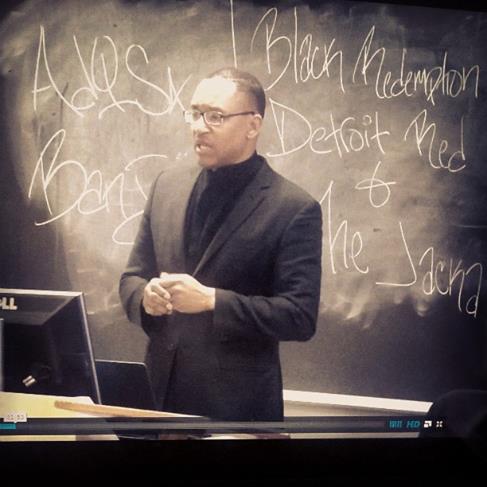
HHCF Founder, Adisa Banjoko teaching Hip-Hop history.


“You must tell them their cultural and historic connections to the subject. The kids are feeling like they have no connection to the formulas and concepts they are being shown. If you teach this as part of their cultural legacy, it will be more exciting to digest.”


My own son was actually home schooled from the  6th grade to the 11th because my wife and I saw many unfair biases in the way the teachers treated him. When my wife first began teaching him algebra he was very unexcited. Then I told my son about Moorish achievements in mathematics, cartography and architecture. David Shenk’s chess book The Immortal Game illustrates how one Moorish scholar of the era used the chessboard, as an abacus! His eye opened a little wider.


I showed him a section of John G. Jackson’s Man, God and Civilization that reads: Students flocked from France, and Germany and England to drink from the fountain of learning which flowed only in the cities of the Moors. The surgeons and doctors of Andalusia (what Spain was called at the time) were in the van of science: women were encouraged to devote themselves to serious study, and the lady doctor was not unknown among the people of Cordova. Mathematics, astronomy and and botany, history, philosophy and jurisprudence were to be mastered in Spain and Spain alone. “


“Look at what all your ancestors invented and how they used all relevant knowledge in the field of mathematics” I said with wonder. “If they could create it, you can at least do them the honor of learning what they made.” He took those words to heart. Making math part of his cultural and racial legacy gave him a reason to rise to whatever occasion was on the whiteboard. He is currently trying to decide between several top tier universities for his college path. For my daughters I do the same thing.


I explained to one of the math teachers, a White female, how crucial this was. “If your students are mostly Latino then you need to tell them about how the Mayans invented the concept of the zero several hundred years before the people of India and they had no contact.” I talked about how Aztec and Mayan architecture is something that should be used to as a cultural bridge for them to understand their legacy in math and science.


Her vacant eyes she blinked in hollow despair “But I don’t know all that stuff.” Her unwillingness to pursue new racial and cultural paths to math told me she was not interested. She still struggles to keep her students engaged to this day.


Her struggle is real, and not uncommon across  America. Many teachers across the country hold the same recalcitrant psychological posture with students of African and Latino descent. This ties the child to a culturally infertile arena where the monotony of formulaic recitation does not feed the brain or the heart. For this reason the minds of many Black boys and girls (like many of their Brown brothers and sisters) are often remain unopened like a treasure chest at the bottom of the sea.  The issue is not about ability, it’s about authentic m consistent engagement.


Helping teens discover their own wisdom is the highest form of teaching.


Unless and until all American children can name African pioneers of math like Imhotep (architect of the first step pyramid) or list the achievements of Benjamin Banneker or George Carruthers , Black children will never believe they have a place where STEM and STEAM are taught.


My emancipation don't fit your equation
-Lauryn Hill, Lost Ones


        Math is a universal language that has been ubiquitously applied in creating virtually all civilizations. Paradoxically there is a racist notion that Black youth are detached from mathematics curriculum, due to an inherent version and cultural disposition towards education. However, this dangerous and quixotic belief is underscored by correlation to the under-subscription of Black students in what is quickly viewed as the most academic fields—STEM education.  This unfounded belief submerges education policy in every American milieu and has even managed to unearth the rancor of the Supreme Court during last year’s debate regarding the polarizing case of Affirmative Action. Recently deceased court Justice Antonin Scalia, is on record, as saying a Black student in a selective college “does not do well” and thus is more auspiciously fit in “a less-advanced school—where they aren’t being pushed ahead in classes that are too fast for them”. This anecdotal narrative has shaped the contours of educational opportunity since well before the Jim Crow era, and yet, it continues to place a student’s race, at the center of conversations around educational disparities, rather than the ecology in which racism socially engineers the construct and pathological associations tied to race.
        It is a common idiom of thought that race creates a susceptibility of understanding. Nevertheless, there is no verifiable research to suggest that Black children are innately less able to solve the geometric challenges presented in Tetris, the algorithms germane to computer coding, or the inductive reasoning requisite of Chess. Black children are not reclamation projects. They are not devoid of creativity as a result of oppression, but like other students, require frameworks of academic achievement that recognize the multiple ways that creativity manifests itself. The rubrics commonly associated with academic excellence are not representative of students, and create what H. Rap Brown (2002) describes as academia’s “monopoly on truth”—that allows schools to create competitive individualism that controls youth, by forsaking the political polarization triggered by race. Stuart Hall (1997) explains that negotiations between students and their educational settings involve students conceding any community-based concerns with racism by focusing on material gains by the individual.  What we do find, is a host of literature that demonstrates the ways in which race impacts academic expectations and perceptions of Black youth, and thus, the harsh conditions that subject them to more exclusionary discipline for subjective infractions in schools, even experienced by students in elementary schools as young as five-years old.


arashhhcf1.jpg
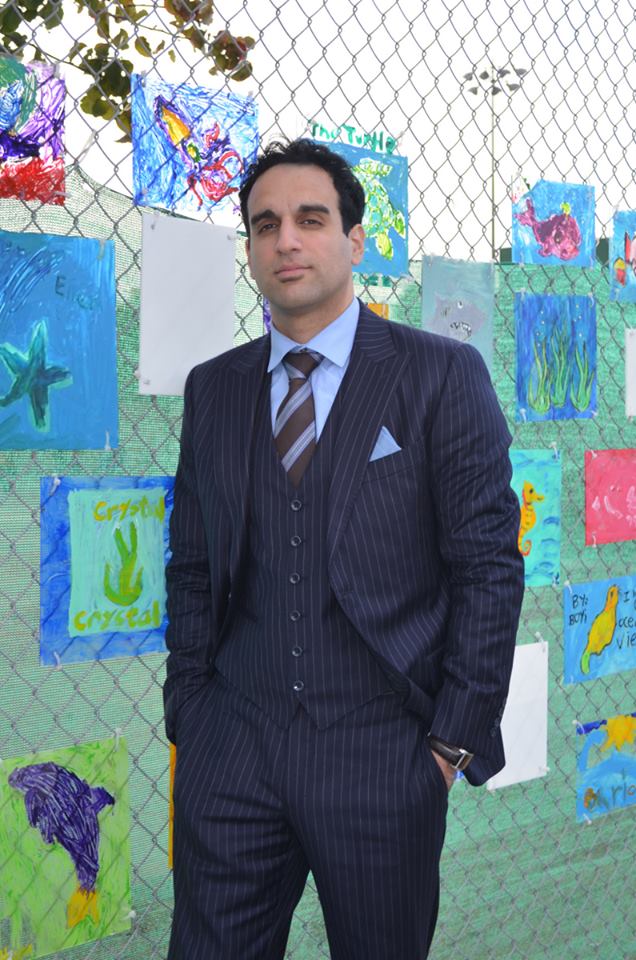
HHCF Director of Education Arash Daneshzadeh.
        Racism legitimizes race as the most salient hurdle towards effective teaching, without examining the toxic and self-effacing environment propagated by racist teaching practices. At the crux of teaching Black youth, is a rigid policy towards control and conformity. This draconian ideology places students in a position at the hegemonic fringe of society, punishing them for an existence more readily associated with criminality as existential threats. Classrooms are subsystems that work on behalf of a racist academic machine that squelches opportunities for inquiry and innovation, and pathologizes Black youth for classroom “errors” that could ultimately give rise to synthesis and greater understanding. Race and ethnicity are not synonymous but inextricably linked. Understanding ethnicity as a portal to community literacy, demarcates access to cultural vehicles that make learning a more familiar experience for students, thereby narrowing the social distance between communities and academic institutions.
The fulcrum of popular culture bends images of urban America. As prelude to Freddie Gibbs’ song, F**kin Up The Count, there is an image of Black youth solving a math problem by finding analogues within the drug trade infesting their neighborhoods. When one youth asks his peer why he’s more likely to solve math problems grounded in criminogenic frameworks commonly associated with drug deals, he responds by citing the live-or-die stakes associated with many Black urban communities. In Strange Fruition, by Hip-Hop emcee Lupe Fiasco, he explains that youth must make “double-edged choices” regarding their identities within White Supremacist frames of school that create a mismatch of power and consequently disillusion Black youth to education systems associated with oppression. Terrell and Terrell (1981) describe this psychological phenomenon among Black youth, as cultural mistrust. In this description, what is perceived, as a student’s impertinent disinterest in math education is a means of self-defense in lieu of the more public narrative of Black destitution. So how do schools begin to move beyond blaming Black youth for wittingly removing themselves from academic spaces, as an executioner would his victim? We must begin with the history of Math education within the realm of public education. From the Algebra Project created by Bob Moses, to Dr. Chris Emdin’s pedagogy that bridges the dialectical space between STEAM and HipHop expression, we find culture as the spool which unites the fabric of math education.


arashhhcf.jpg (1).jpg
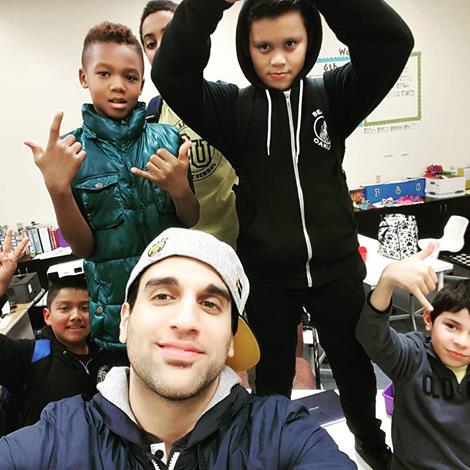
Arash and HHCF students after a day of chess and life strategies class in Oakland, CA.
        When examining the architecture of antiquity, one finds plush and radiant mosques from civilizations throughout Africa and contiguous acres that comprised Mesopotamia. But despite the reality of Black cultural representation since the dawn of civilization, images that forge a vast and pervasive influence from Black scholars do not parallel the intellectual ancestry that is generated in school curricula. Given the bounteous presence of conical shapes, pillars with concentric orbs, that stood atop Moorish arches, it stands to reason that today’s STEAM studies could create a more critical literacy of math education by representing the Pan-African contributions to the canon. Education practitioners and policy wonks use false assumptions about math to justify expectations that have more to do with anti-Blackness, ethnicity, national origin and gender, than reasoning and cognitive function. In Schooling for the New Slavery (1978), Donald Spivey asserts that the validity of anti-Black perceptions is fortified by the emergence of White settler education systems. Asa Hilliard furthers this position by recounting cases in which schools have “kept African people away from the data needed to interpret their own cultural and history reality” (1995, p. 189). Black youth are given the imperative to center a revisionist history as the benchmark of success. We treat the curricular mismatch between schools and students as a student deficiency or cultural problem squarely placed upon the shoulders of students with faddish bromides, such as academic grit or personal responsibility. These semantic dodges skirt the implication of schools—as a tool for perpetuating racist ideology—and avoid meaningful discussion about the ecology of anti-Black schooling.

        Finally, while Europe struggled to emerge from the Middle Ages, troves of literature demonstrate the unrivaled contributions that African scholars, during that era, made to the field of mathematics and other sciences. Yet, these iconic fixtures are all but removed from Western curriculum. Imagine if students were offered a portal into their intellectual ancestry in math, the same way Spanish immersion allows non-Native English speakers from Spanish-speaking countries to make lateral connections in the classroom. There are thousands of noteworthy contributions that Black scholars have made to mathematics, well before public schools were formally ratified in the Western Hemisphere. Timbuktu gave rise to many differential equations formulas used today by astronomers. These formulas were cultivated during the inception of the Ghanaian Empire (modern Mali) during the 11th and 12th century. Yet, the Treatise of Algebra, scribed 400 years later by John Wallis in 1685, is still revered as the seminal work from which astrophysicists operate. Omar Khayyam, a Persian scholar, is often recalled, as no more than an indulgent Sufi poet from the 11th century, yet he is responsible for finding the intersections between cubic and conic equations, which has influenced the architecture traditionally associated with colonial Spain. In regards to Arab contributions to math B Carra de Vaux wrote “They made algebra an exact science and developed it considerably and laid the foundation of analytical geometry; they were indisputably the founders of plane and spherical trigonometry which, properly speaking, did not exist among the Greeks. “

        To create a more equitable school system in which individual identities are not stigmatized, we must have painstaking and honest conversations around the process of academic identification. In order to fully affirm the academic pedigree of mathematics, we must recognize the geopolitical contributions that all cultures have made to its canon. Until then, Black youth will continue to be ensnared by the false binary of “underachievement” and fatalistic trappings of Eurocentric distancing. By stigmatizing and historically abstracting Black ancestry from the academic canon, we manufacture a pathology of Black youth, rather than achievement itself, as in need of restoration.


Adisa Banjoko is the Founder of the Hip-Hop Chess Federation (HHCF). They are the first 501c3 non-profit to fuse music, chess and martial arts to teach STEM, STEAM and Life Strategies. He is the author of the upcoming book Bobby, Bruce & Bam: The Secrets of Hip-Hop Chess. Follow on IG @realhiphopchess  

Arash Daneshzadeh is the Director of Education for Hip-Hop Chess Federation and a Professor of Education, in the Organizational Leadership Program at the University of San Francisco. Twitter: https://twitter.com/A_Daneshzadeh

Uproxx Covers HHCF Founder plus, FREE PDF download of Bobby Bruce and the Bronx Available

The book Bobby Bruce & the Bronx by Adisa the Bishop is now available from this day forward FREE in PDF form. Please enjoy it and share ...